How Gutter Installation in Hackettstown Helps Prevent Water Damage
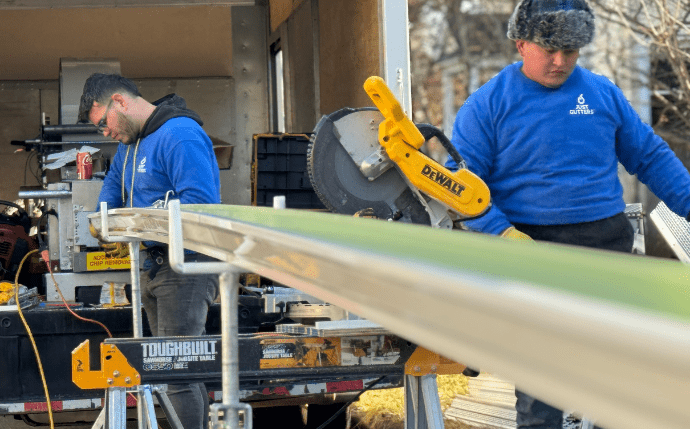
Water damage rarely starts with a dramatic event. More often, it begins quietly at the roofline, where rainwater fails to move away from the house the way it should. A slight overflow during a storm, a downspout that dumps too close to the foundation, a section of gutter pitched the wrong way, these are small problems on their own. Left alone, they become stained siding, rotted fascia, basement seepage, mold in wall cavities, and expensive structural repairs.
That is why proper Gutter Installation in Hackettstown matters more than many homeowners realize. In a place like Hackettstown, where homes see steady rain, summer downpours, falling leaves, winter ice, and repeated freeze thaw cycles, gutters do real work. They are not decorative trim. They are part of the home’s drainage system, and when they are designed and installed correctly, they help protect nearly every major part of the building envelope.
Homeowners often notice gutters only when they fail. By then, the signs are already there: mulch washed out of planting beds, puddles gathering near the foundation, peeling paint around window trim, dark streaks on siding, and water entering the basement after storms. Good gutters are meant to prevent those symptoms before they start.
Water has to go somewhere
Every roof collects an enormous amount of water during even a moderate rain. On a typical single family home, a one inch rainfall can shed hundreds of gallons off the roof in a short window of time. Without a functioning gutter system, that water falls straight to the ground along the perimeter of the house. It hits hard, splashes mud onto siding, erodes soil, and saturates the area around the foundation.
This is the core reason Gutter Installation is so important. Gutters catch roof runoff, channel it along a controlled path, and direct it through downspouts to a safer discharge point. That sounds simple, but the difference between a well planned system and a poor one shows up fast.
I have seen homes where a single missing downspout extension caused years of trouble. The owner focused on sealing small basement cracks, repainting trim, and replacing sections of landscaping, yet the real issue was rainwater being released a foot from the foundation every time it stormed. Once the drainage path was corrected, the recurring moisture problems eased.
Hackettstown homes present a mix of conditions that make drainage planning especially important. Some lots are flat. Others have subtle slopes that pull water toward the house rather than away from it. Older homes may have settled over time. Newer developments can have compacted soil that drains poorly. A gutter system has to account for those realities, not just hang neatly under the eaves.
Why Hackettstown homes face a real risk
Hackettstown sees the kind of weather pattern that exposes weak drainage systems. Long spring rains soak the ground over several days. Summer storms can dump a lot of water quickly. In autumn, leaves and twigs clog channels and outlets. In winter, melting snow and ice can refreeze at roof edges and in troughs.
Each season creates its own pressure point. Spring tests capacity and drainage. Summer tests overflow handling. Fall tests maintenance. Winter tests durability, slope, and attachment strength.
That seasonal cycle is why Gutter Installation Hackettstown should never be treated as a one size fits all purchase. The system needs to match the home’s roof area, roof pitch, tree coverage, local runoff patterns, and exposure to storms. A small ranch on an open lot does not need the same setup as a tall colonial shaded by mature maples. Even homes on the same street can require different downspout placement depending on grading and foundation layout.
Professionals who work in Hackettstown learn quickly that local conditions matter. You can install a standard gutter package and call it done, but if water still lands near the foundation or backs up at roof valleys, the house remains vulnerable.
The hidden places water damage begins
Most people think of water damage as something obvious, like a ceiling stain or a flooded basement. In practice, the early damage is often concealed. Water gets behind fascia boards. It enters soffit vents. It works into trim joints. It sits against the foundation wall and finds tiny openings. The damage builds gradually.
Fascia rot is one of the most common issues connected to failing gutters. When gutters overflow or pull away from the house, water runs behind them and soaks the wood they are attached to. At first the paint bubbles. Then the wood softens. Eventually the fasteners loosen, which makes the gutter sag more, which sends even more water where it should not go. It is a predictable cycle.
Foundation problems can be even more costly. Soil around the home expands as it becomes saturated, then contracts as it dries. Over time, that movement can contribute to settlement and cracking. Not every foundation crack comes from poor drainage, but uncontrolled roof runoff certainly makes conditions worse.
Basements and crawl spaces often tell the story clearly. If water appears after heavy rain but not from plumbing use, exterior drainage deserves close attention. People are sometimes surprised to learn that their basement moisture problem does not begin below grade. It starts at the roof.
Proper installation is more than hanging metal
A lot of homeowners compare gutter bids by material and price alone. Aluminum or another material. Seamless or sectional. Standard color or upgraded finish. Those choices matter, but installation quality matters just as much, and often more.
A properly installed system depends on several details working together:
- Correct sizing for the roof area and rainfall load
- Proper pitch so water flows without standing
- Strong fastening into sound fascia or rafter tails
- Enough downspouts to handle volume efficiently
- Safe discharge away from the home’s foundation
If any one of those is wrong, the entire system underperforms. I have seen brand new gutters that looked clean from the driveway but held water because the pitch was off by a small margin. Within months, debris collected in the standing water, the weight increased, and the gutter began pulling away. The material was fine. The installation was not.
Downspout placement deserves particular attention. Homeowners often focus on where gutters will be visible and less on where water will end up. Yet the downspout discharge point is where the prevention work really happens. If the water exits onto a walkway, into a flower bed pressed against the foundation, or onto a driveway that slopes back toward the garage, the system has not solved the problem. It has only relocated it.
Roof design changes everything
Not all roofs shed water in the same way. A simple gable roof is relatively straightforward. A roof with multiple valleys, dormers, intersecting sections, and long runs concentrates water in ways that can overwhelm undersized or poorly placed gutters.
Roof valleys are notorious high volume areas. During a heavy storm, water from two roof planes converges and rushes toward one point. If the gutter below that valley is too small or the downspout is too far away, overflow is likely. That overflow often lands right at a corner of the house, where splashback can affect siding, windows, trim, and the foundation.
Steeper roofs can also increase flow speed. Water reaches the gutter with more force, especially in hard rain. In some cases, splash over becomes an issue even when the gutter is technically clear. That is where contractor judgment matters. The solution may involve a larger gutter profile, an additional downspout, a different outlet location, or accessories that help guide water into the trough more effectively.
This is one reason experienced local installers bring more value than a generic, lowest price approach. Gutter Installation Hackettstown works best when the contractor reads the roof, the lot, and the drainage path as one system.
Seamless gutters and why homeowners often prefer them
Seamless gutters are popular for good reason. Because they are formed in continuous lengths on site, they have fewer joints than sectional systems. Fewer joints usually means fewer places for leaks to develop over time.
That does not mean sectional gutters never work. On some structures, especially sheds, garages, or smaller budget conscious projects, they may be acceptable. But for primary residences, seamless systems are often worth the investment because they reduce maintenance points and typically look cleaner along the roofline.
The aesthetic side should not be dismissed. Gutters are visible, and they affect curb appeal. But appearance should follow performance, not replace it. A crisp line under the eaves means little if the water still pools against the home.
In Hackettstown, where seasonal movement and weather exposure can stress joints, reducing the number of seams is a practical advantage. It is one of those upgrades that may not attract attention on day one, but it often pays off in fewer leak related headaches down the road.
The role of gutter guards, and where they help
Homeowners often ask whether gutter guards eliminate maintenance. They do not. What they can do is reduce the frequency of clogs and help the system perform more consistently, especially in neighborhoods with heavy tree cover.
Hackettstown has plenty of homes surrounded by mature trees, and that creates a predictable mix of leaves, seed pods, twigs, and roof grit. Guards can help, but they are not universally beneficial in every form. Some mesh systems work well. Some reverse curve styles can struggle under certain conditions. Some products perform differently depending on the roof pitch and the type of debris common on the property.
The best decision usually comes from matching the guard type to the house rather than assuming any add on product will solve everything. There is also a trade off. Guards add upfront cost, and on homes with minimal tree cover, that cost may not return much practical value.
For homeowners deciding whether to include guards with a new gutter installation, the smarter question is not “Are guards good?” It is “Will guards reduce the kind of clogging this property actually experiences?”
Warning signs that your current gutters are failing
Sometimes the need for new gutters is obvious. Other times, homeowners live with a gradual decline and assume what they are seeing is normal. It is not normal for gutters to leak at every joint, dump water over the front edge in moderate rain, or leave wet soil pressed against the foundation for days after a storm.
Watch for these signs:
- Water spilling over the sides during rainfall
- Gutters sagging, separating, or pulling from the fascia
- Peeling paint, staining, or soft wood near the roofline
- Erosion, trenches, or mulch washout below roof edges
- Basement dampness that worsens after rain
One homeowner I spoke with thought the washed out bed along the front porch was just a landscaping issue. It turned out the nearest downspout was undersized and partially clogged, and the gutter itself had a low spot that trapped debris. The landscaping problem was simply the visible result of a drainage failure.
Installation quality affects long term maintenance
There is a practical maintenance angle that often gets overlooked. Good installation makes routine upkeep easier and more effective. Bad installation creates a system that clogs faster, drains slower, and wears out earlier.
Pitch is a perfect example. If the pitch is too flat, water lingers and sediment settles. If the pitch is too aggressive, the gutter line can look uneven and place strain on certain areas. The goal is enough slope to move water efficiently without making the installation visually awkward or mechanically unbalanced.
Fastener choice also matters. In regions that experience winter weather, gutters need secure attachment that can handle the weight of water, debris, and occasional ice buildup. Weak fastening may hold for one season, then begin to fail under load. Once sections loosen, the system rarely improves on its own.
This is where lower bids can become expensive. A quote that saves a few hundred dollars upfront may rely on fewer downspouts, lighter attachment methods, or minimal attention to drainage layout. Those shortcuts may not show immediately, but they often show eventually.
How proper drainage protects more than the house
A good gutter system protects the home, but it also protects the surrounding property. Landscaping, walkways, patios, and entry points all benefit when runoff is controlled.
Unmanaged water can destroy a carefully planted bed in one season. It can cause pavers to settle unevenly. It can leave algae growth on shaded concrete. In winter, it can create icy patches near gutter replacement Hackettstown doors and sidewalks where discharged water refreezes. Those are not only maintenance problems. They can become safety concerns.
Families often notice this most around front entries and garages. If water is allowed to pour off the roof near steps or pool beside the driveway, surfaces become slick, dirty, and vulnerable to freeze related damage. Redirecting that runoff through proper Gutter Installation can make the exterior safer as well as drier.
Choosing the right contractor in Hackettstown
A strong installation starts with a careful site evaluation. The contractor should look at roof sections, measure runs, identify valleys, study the grade around the home, and discuss where downspouts can discharge effectively. If the conversation focuses only on color and price, something is missing.
A few things are worth asking before hiring:
- Will the gutter size and downspout count be based on roof area and drainage load?
- How will water be directed away from the foundation after it leaves the downspouts?
- Are there problem areas such as valleys, porches, or low grade sections that need special planning?
- What attachment method will be used, and what condition is the fascia in?
- Will old drainage issues be evaluated, not just the old gutters replaced?
That last point matters. Replacing gutters without addressing the reason the old system struggled can lead to the same problems in a newer package. If there has been overflow at one corner for years, the solution may require redesign, not just replacement.
Cost versus value
Homeowners naturally ask what Gutter Installation will cost, but the better question is what poor drainage will cost if ignored. Gutters are relatively inexpensive compared with fascia replacement, basement waterproofing, mold remediation, foundation repair, or siding restoration.
Pricing varies based on house size, height, material, number of corners, downspout count, accessibility, and whether gutter guards are included. A simple one story home is very different from a large two story home with complex rooflines and multiple drainage challenges. That is why broad price claims are rarely useful. What matters more is whether the system design fits the house and solves actual water movement issues.
It helps to think in terms of risk reduction. Proper gutters reduce the chance of damage to several high cost parts of the property at once. Few exterior upgrades have that kind of reach.
Why timing matters
Many people wait until gutters fail completely before acting. That tends to mean scheduling work after damage has already appeared, often during a busy season when contractors are heavily booked. A better approach is Gutter Installation Hackettstown to replace or install gutters when warning signs first emerge or when a roofing project is already underway.
Roof replacement is often an ideal time to evaluate gutters because access is already part of the job, and any edge details affecting drainage can be addressed together. Still, gutters should not be treated as an afterthought. They deserve separate planning.
Seasonal timing in Hackettstown matters too. Waiting until late fall, after leaves are dropping and winter weather is around the corner, can compress the timeline and increase the chance that problems will carry into freezing conditions. A sagging or clogged system heading into winter is far more likely to create ice and overflow issues.
What homeowners in Hackettstown gain from doing it right
When gutters are installed correctly, the benefits are visible but not flashy. The basement stays drier. The mulch stays in place. The siding stays cleaner. The fascia lasts longer. The soil around the foundation stays more stable. You stop hearing heavy dripping near the front steps during storms. You stop seeing puddles where puddles should not be.
That quiet reliability is exactly the point.
For homeowners considering Gutter Installation Hackettstown, the real value lies in prevention. The system does its work every time it rains, every time snow melts, every time a storm puts pressure on the house. When designed thoughtfully and installed with care, gutters become one of the simplest and most effective defenses against water damage.
Hackettstown homes deal with real weather and real drainage challenges. A proper gutter system does not eliminate every moisture risk, but it addresses one of the biggest and most controllable ones. For many properties, it is the first fix that should happen, not the last.
Just Gutters LLC
Address: 262 Main St, Hackettstown, NJ 07840
Phone number: +12013319454
FAQ About Gutter Installation Hackettstown
Can I install a gutter myself?
Yes, you can install gutters yourself. DIYers typically use aluminum or vinyl sections from home improvement stores. The project requires basic tools, precise measuring, and comfort working on ladders. Key steps include snapping a chalk line for a slight slope (1/4 inch per 10 feet toward downspouts), securing hangers every 2 feet, and caulking all joints securely.
How much does body contouring usually cost?
The Home Depot typically charges between $1,000 and $3,600 for a standard professional gutter installation on a typical single-family home with 200 linear feet of gutters. Calculated on a per-foot basis, the cost usually ranges from $5 to $18 per linear foot, highly dependent on the material you select.
How much does a 40 ft seamless gutter cost?
A 40 ft seamless gutter run will cost between $240 and $1,120+ fully installed, depending on the material you choose. Because seamless gutters require specialized on-site fabrication machines, they are rarely sold as DIY kits and are priced per linear foot.